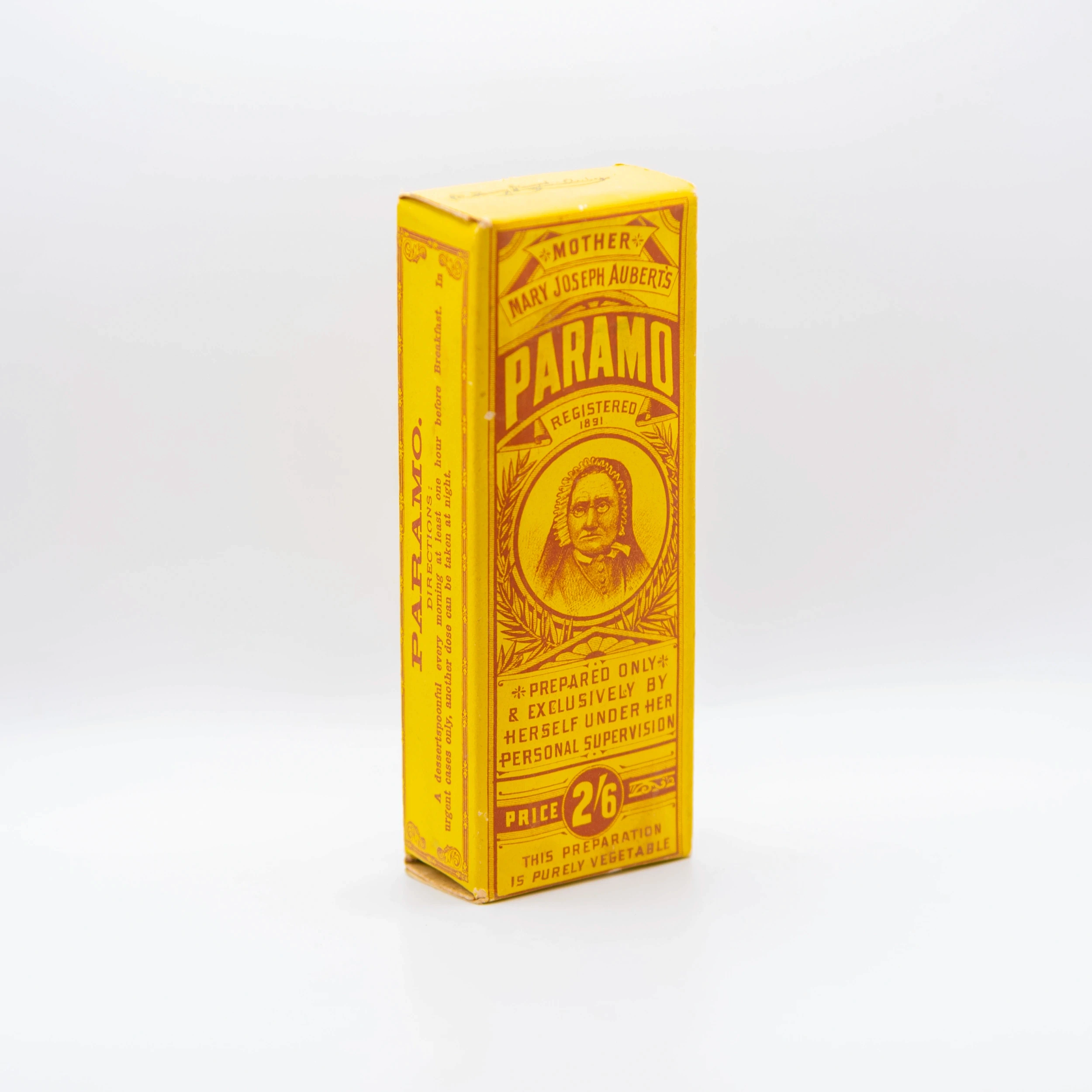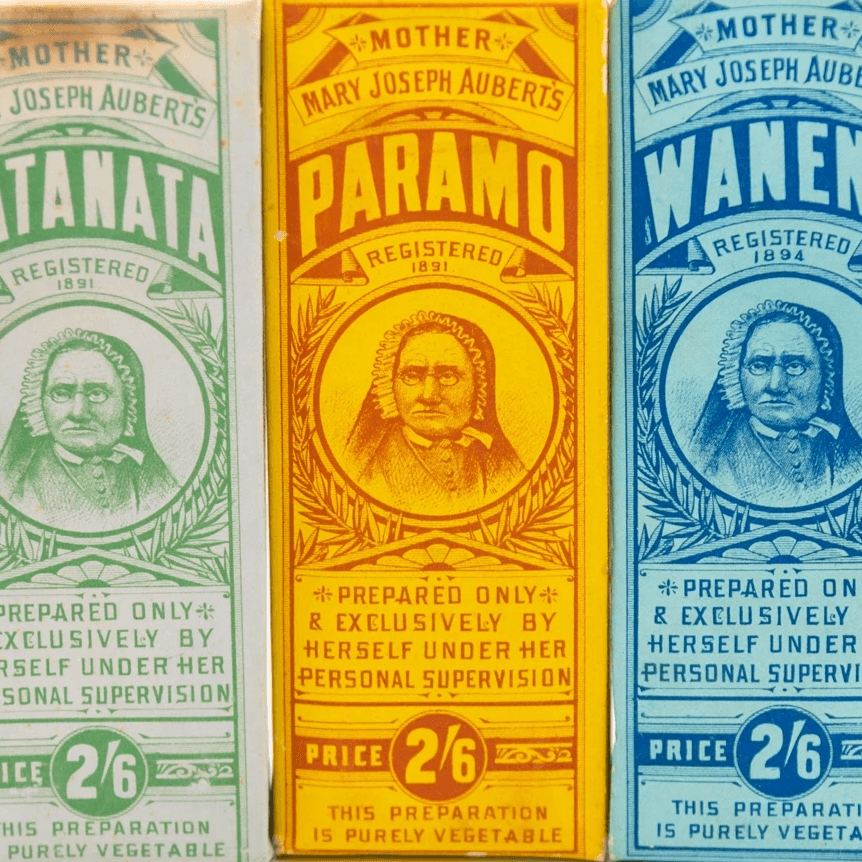

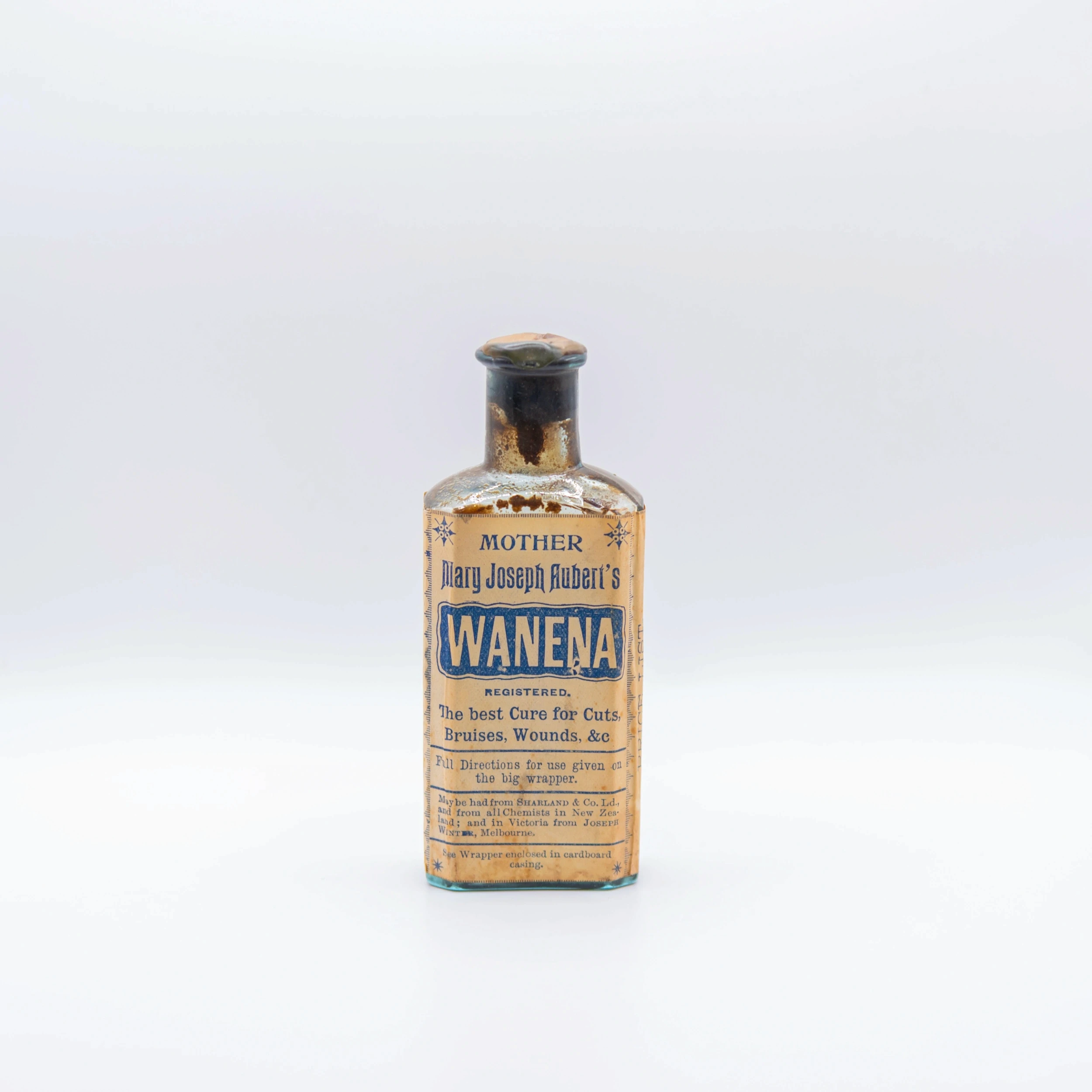
Suzanne Aubert’s healing ministry began in France when she worked as a nurse and studied botany, chemistry, and medicine in Lyon, and her interest deepening further when she moved to New Zealand. Here she studied the local plant materials and herbal remedies and concocted her own ‘rongoā’.
She ministered to the Māori people and settlers and became known as the first ‘district nurse’. When she moved to Hiruhārama , Suzanne became renowned for her medical and surgical services. Her remedies and medicines were in great demand, the sale of them helping to fund the Sisters’ mission. The native herbal remedies from were the first to be used to any notable extent by the non-Māori community. Suzanne Aubert’s herbal remedies.
Exactly which plants went into Suzanne’s medicines and in what proportions are unknown as her notebooks of recipes were either destroyed or lost. As Māori rongoā does not follow closely prescribed recipes, Suzanne and her Māori teachers would have drawn mainly on their experience to assess their patients’ needs and select and mix the plants appropriately.

1993
A project was launched to analyse Suzanne’s remedies and reconnect with Māori communities and knowledge.
In 1993, the Herbal Remedy (Rongoā) Analysis Project was initiated to analyse the medicines that remained. The project also reconnected the Sisters of Compassion with hapū from Hawkes’s Bay and Peata’s (Suzanne’s mentor in all things Māori, including medicinal lore, was Peata Hoki, an influential relative of the powerful Ngāpuhi chief, Rewa.
1840
Peata Hoki was baptised by Bishop Pompallier and later became a Sister of the Holy Family.
She had been baptised by Bishop Pompallier in 1840, shortly before the Treaty of Waitangi was signed, and became a Sister of the Holy Family, along with Suzanne) home area in the Bay of Islands, where Suzanne had earlier gained knowledge of rongoā, as well as from Ngāti Hau and Ngāti Ruaka on the Whanganui River.

1999
Suzanne’s work was honoured with a Biotechnology Heritage Award, recognising her pioneering blend of Māori and Western medicine.
While the project, led by Dr Max Kennedy of Industrial Research Ltd, was unable to decode the recipes, it did successfully document Suzanne Aubert’s rongoā expertise and experience, define and protect the 100-year-old intellectual property and lead to the New Zealand Biotechnology Heritage Award in 1999. This distinguished award recognised Suzanne as the first person to successfully combine Māori and Western medicines into products and commercially extract NZ native plants, the first woman to launch a commercial biotechnology process in NZ, and the first to export such a product.