



1860
Arrival in Aotearoa and Early Mission Work with Māori
Suzanne arrived in Auckland in December 1860 on a small whaling ship with other missionaries. Initially Suzanne and the other Frenchwomen joined the Sisters of Mercy and they worked at the Nazareth Institute, boarding school for Māori girls. Suzanne’s mentor in all things Māori, including medicine, was Peata Hoki. Peata and Suzanne continued to work helping young Māori, but left Auckland to work at the Marist Māori mission station in Hawke’s Bay after Bishop Pompallier’s successor opposed their mahi.

1871
Deepening Her Work through Care, Nursing, and Māori Language Development

1874
Strengthening the Mission through Ongoing Support from Bishop Redwood
In 1874 Suzanne was pinning her hopes for a revival of the Māori mission on the new Bishop of Wellington, Bishop Redwood, who would become her lifelong supporter.
In 1871, aged 35, Suzanne, now proficient in te reo and tikanga, became well-known in the Hawkes Bay area for her pastoral and nursing care to Māori and Pākehā, Catholic and non-Catholic. It was during this time she complied an English – Māori dictionary and a Māori – English phrasebook.
1883
Move to Hiruhārama and Founding of the Daughters of Our Lady of Compassion
In 1883, at the invitation of the Māori, Suzanne left Hawke’s Bay for Hiruhārama/Jerusalem, (located 64 km up the Whanganui River) where she hoped to revive the Catholic mission. It was here that the home-grown Catholic congregation – the Daughters of Our Lady of Compassion – was born.


1885–1893
After the church burned down, Suzanne raised funds to rebuild the church and convent.
On Christmas Day 1885, Bishop Redwood blessed St Joseph’s Church. When it burned down three years later, Suzanne set off on a fundraising tour of New Zealand, returning in 1893 with £1000 – enough to build a new church and convent.
1892
Suzanne became Mother Superior of the Daughters of Our Lady of Compassion.
In 1892 Archbishop Redwood appointed Suzanne as Mother Superior of the Daughters of Our Lady of Compassion.

1899
Suzanne sets her sights on Wellington
During her fundraising tour, Suzanne had become acutely aware of the challenges faced by poor and unmarried mothers and their babies. She took 74 babies and children into their care, but Hiruhārama was too isolated from medical services. So, Suzanne set her sights on Wellington, arriving unannounced in the city in 1899 with two Sisters.
1907
Our Lady’s Home of Compassion was opened in Island Bay.

1913
Suzanne travelled to Rome to present her case to the Pope.
Suzanne never stood still, and her reputation spread far and wide. She rose to every challenge that came her way, travelling to Rome in 1913 at the age of 78 to present her case to the Pope.
More than four years later, Pope Benedict XV granted the Decree of Praise to the Daughters of Our Lady of Compassion. The Decree changed everything:
It protected the work she had started
It widened her scope for healthcare
It protected her resolution that their work would be for everyone
It recognised her interpretation of New Zealand society and spirituality

1920
Suzanne returned home and continued leading and developing the Home.

1922
The Sisters began nursing training to support the new hospital.
In early 1920 a frail but triumphant Suzanne returned home to Island Bay to the Sisters who, in her absence, had remained true to her cause. Back at the helm, she arranged for extensive alterations to the Home for a surgical section and, in 1922, the Sisters began nursing training to work in the new hospital.

1926
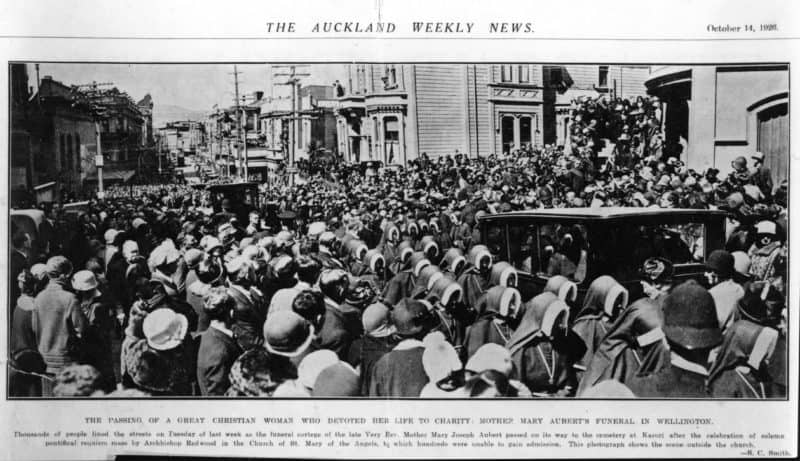
Suzanne died aged 91, honoured by large crowds across Wellington.

1951
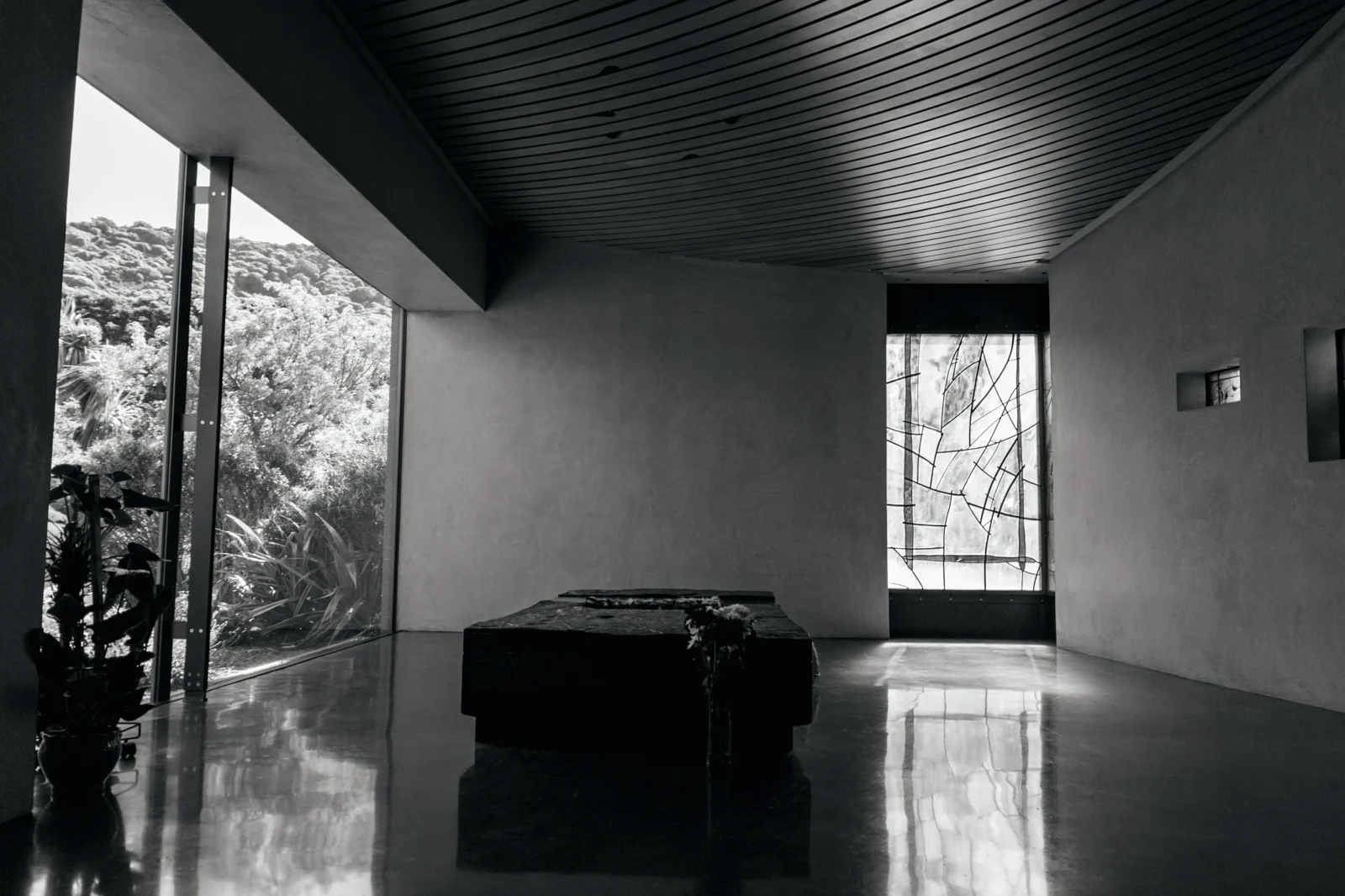
Her remains were transferred to the Home of Compassion in Island Bay.
On 1 October 1926 at the age of 91, Suzanne died in the presence of her Sisters. As word spread, the crowds gathered to pay their respects. Wellington’s streets and roofs were packed with people silently watching the hearse pass by. It was widely reported to be the greatest-ever funeral accorded to a woman in New Zealand.
Suzanne Aubert was buried at Karori cemetery, her remains being transferred to Our Lady’s Home of Compassion Island Bay 25 years later.